

I. Introduction
The Growth of the Digital Economy in Tanzania
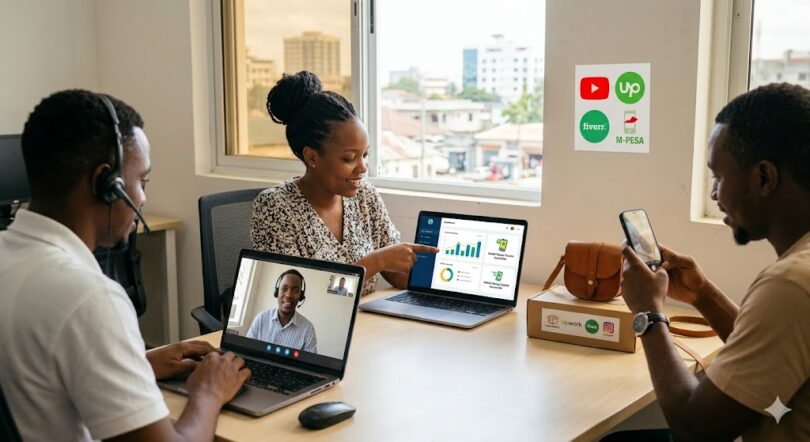
The digital landscape in Tanzania is evolving rapidly. With increasing internet penetration and smartphone adoption, the traditional 9-to-5 is no longer the only path to financial stability. From Dar es Salaam to Arusha, young professionals, students, and entrepreneurs are tapping into the global digital economy to earn a sustainable income. Whether you are looking for a side hustle or a full-time online career, the opportunities have never been more accessible.
Essential Requirements
Before diving into specific online ventures, you need a basic foundation. The barrier to entry is surprisingly low:
-
Hardware: A decent smartphone or a reliable laptop/PC.
-
Connectivity: A stable internet connection (a reliable 4G data bundle or home Wi-Fi).
-
A Dedicated Mindset: Online work requires the same discipline and consistency as a traditional job.
Overview of Local Payment Gateways
The biggest question for many Tanzanians is, “How do I actually get paid?” Thankfully, the local financial infrastructure is highly optimized for digital payments.
-
Mobile Money: Services like M-Pesa, Tigo Pesa, and Airtel Money are the backbone of Tanzanian e-commerce. Many international payment gateways now integrate directly with these mobile wallets.
-
Local Banks: Banks like CRDB, NMB, and Equity offer Visa and Mastercard debit cards that easily link to platforms like PayPal, Payoneer, and Skrill, allowing you to withdraw global earnings locally.
II. Freelancing and Remote Work
Identifying High-Demand Digital Skills
Freelancing involves offering your skills to clients on a project basis. To succeed, you need to identify what the market wants. Highly sought-after digital skills include:
-
Graphic Design: Creating logos, social media posts, and marketing materials.
-
Web Development: Building websites using WordPress, Shopify, or custom code.
-
Copywriting and Translation: Writing blog posts, ad copy, or translating documents between English and Swahili.
Navigating International Platforms
You don’t need to look for clients locally; the world is your marketplace. Platforms like Upwork, Fiverr, and Freelancer connect you with international clients. The key to standing out is building a strong portfolio, collecting positive reviews, and pitching yourself professionally.
Withdrawing Global Earnings to Tanzanian Accounts
Once you earn money on these platforms, withdrawing is straightforward. You can route your earnings from Upwork or Fiverr to a Payoneer account, which can then be directly withdrawn to your local Tanzanian bank account or sometimes directly to mobile money.
III. Social Media E-commerce and Dropshipping
Setting Up Shop on Instagram, Facebook, and WhatsApp
You don’t need an expensive website to start selling online in Tanzania. Instagram and Facebook serve as excellent visual storefronts. By utilizing WhatsApp Business, you can communicate directly with customers, share catalogs, and close sales seamlessly.
Sourcing Products
There are two primary ways to source products:
-
Local Wholesalers: Buying items in bulk from bustling local markets like Kariakoo in Dar es Salaam and reselling them online at a retail margin.
-
International Dropshipping: Listing products on your page that you don’t physically hold. When a customer orders, you buy it from an international supplier (like AliExpress) and have it shipped directly to them.
Managing Logistics with Local Delivery Riders
E-commerce in Tanzania relies heavily on the local Bodaboda (motorcycle) network. Partnering with reliable delivery riders ensures your products reach customers quickly and safely across the city. Most local businesses operate on a “Cash/M-Pesa on Delivery” model to build trust.
IV. Content Creation and Influencer Marketing
Building an Audience
If you have a knack for entertaining or educating, content creation can be highly lucrative. Platforms like YouTube, TikTok, and Instagram allow you to build a dedicated following. Niche down into specific topics like tech reviews, beauty tutorials, comedy, or local travel.
Monetizing Through Google AdSense
For YouTubers and bloggers, Google AdSense is a primary revenue stream. Once you meet the platform’s eligibility requirements (e.g., 1,000 subscribers and 4,000 watch hours on YouTube), you can display ads on your content and earn money based on views and clicks.
Securing Local Brand Sponsorships
As your audience grows, local businesses will pay for your influence. Telecommunication companies, banks, and lifestyle brands in Tanzania frequently partner with content creators for shoutouts, product reviews, and ambassador programs.
V. Online Tutoring and Consulting
Teaching Swahili to International Students
Swahili is one of the fastest-growing languages globally. You can monetize your native fluency by teaching international students, researchers, and tourists on language platforms like iTalki or Preply.
Providing Academic Tutoring
Leverage video conferencing tools like Zoom or Google Meet to offer academic tutoring for local primary and secondary students. Focusing on high-demand subjects for NECTA exam preparation (like Math, Physics, or English) can generate a steady local income.
Offering B2B Digital Consulting
Many traditional Tanzanian businesses struggle to establish an online presence. If you understand digital marketing, you can offer consulting services. Help local shops set up Google My Business profiles, run Facebook ads, or manage their social media pages for a monthly retainer.
VI. Affiliate Marketing and Digital Products
Creating and Selling Digital Products
Digital products have excellent profit margins because you create them once and sell them infinitely. Consider writing an e-book, designing resume templates, or recording an online course. Platforms like Selar are tailored for the African market and easily process payments via mobile money.
Joining International Affiliate Programs
Affiliate marketing involves promoting other people’s products and earning a commission for every sale made through your unique link. Amazon Associates is a globally recognized program. You can review gadgets or books on your blog or YouTube channel and include your affiliate links.
Leveraging Local Tanzanian Affiliate Networks
Keep an eye out for local affiliate opportunities. Some Tanzanian web hosting companies, betting platforms, and e-commerce stores offer referral bonuses when you bring them new customers.
VII. Conclusion
Identifying and Avoiding Common Online Scams
The internet is full of opportunities, but it also has pitfalls. Avoid “get-rich-quick” schemes, online platforms that ask you to pay a high joining fee, or jobs that promise unrealistic returns for little effort. If it sounds too good to be true, it likely is. Protect your personal and financial information.
Managing Internet Data Costs
Data can be expensive. To maximize your profits, learn to manage your internet costs. Buy monthly or weekly bundles rather than daily ones, utilize night-time data packages for heavy uploads/downloads, and work from locations with free, secure Wi-Fi when possible.
Final Summary and Recommended First Steps
Making money online in Tanzania is entirely possible, but it is not magic—it requires effort, skill-building, and patience. Your first step: Choose one method from this list that aligns with your current skills. Whether it’s setting up an Instagram shop, signing up for Upwork, or teaching Swahili online, focus your energy on mastering that single avenue before branching out. Stay consistent, keep learning, and your digital income will grow.






https://vodka-bett.bet/ здесь можно играть через актуальное зеркало